
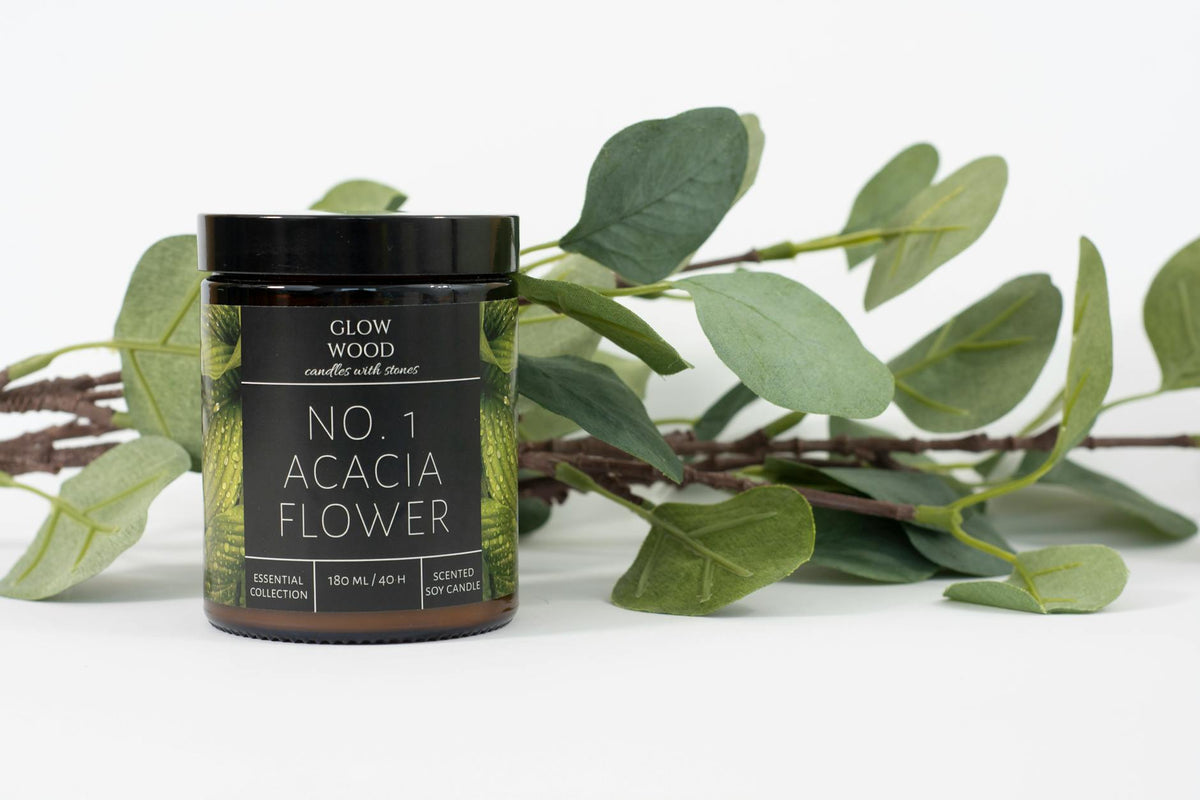
Printing custom candle labels in-house changes the economics of small-batch production: no minimums, no three-week waits, and design changes that cost nothing but a few seconds of software time.
TL;DR: Small-batch candle makers who need custom candle labels on demand should build around a direct thermal or thermal transfer printer rather than outsourcing to a print shop. In 2026 the per-label cost of in-house printing drops below $0.05 at volume, versus $0.15–$0.40 per label from most short-run vendors. The right setup depends on label material (paper vs. polyester vs. glossy), finish, and how often your artwork changes.
Why this matters
Outsourcing label printing works until your scent lineup changes, a customer wants a custom gift batch of 24 jars, or a retailer asks for SKU barcodes within 48 hours. At that point, a 500-unit minimum order from a print vendor becomes an obstacle, not a solution. In 2026, direct thermal and thermal transfer desktop printers cost under $300 for entry models and produce professional labels at 203–300 DPI — sharp enough for fine script fonts and small logos. The math shifts decisively toward in-house once you're printing more than a few hundred labels a month.
Who this is for
This guide is written for independent candle makers producing 50–2,000 units per month across multiple SKUs — seasonal scents, private-label orders, farmers market lines, and Etsy-to-wholesale crossover brands. You change artwork frequently, you cannot absorb a 1,000-unit label minimum, and you want finished labels that survive wax residue, humidity, and a retail shelf without peeling.
What to look for in custom candle labels for small-batch makers
Print resolution
203 DPI handles barcodes and block text cleanly. If your label design includes fine script, small-point ingredient lists, or a detailed logo, step up to 300 DPI. The difference is visible on a 2-inch label. Printers like the Godex RT230i run at 300 DPI and cost roughly $30–$50 more than their 203 DPI siblings — worth it for anything with decorative typography.
Label material and finish
Paper thermal labels are the cheapest option but absorb moisture. Candle jars sweat. A glossy white polyester label or a matte polyester stock resists condensation, wax drips, and the oils that migrate from soy and coconut wax. For high-end retail positioning, a metallized silver polyester gives a premium look without custom foil printing costs. Match the material to where the candle lives: paper for craft-fair one-offs, polyester for anything going on a retail shelf.
Adhesive strength
Candle glass and tin have smooth, often slightly oily surfaces. A standard paper adhesive will lift at the edges within weeks. Permanent acrylic adhesives hold on glass, ceramic, and metal. If you're labeling frosted or textured glass, test a small batch before committing to a full roll — surface texture affects adhesion more than most people expect.
Label size flexibility
A 2" × 4" wrap label on a jar is not the same die as a 2" × 2" lid label. In-house printing on a roll-fed thermal printer lets you run any size that fits the print width, with no tooling charge per size change. Most desktop thermal printers handle 1-inch to 4-inch wide stock, which covers nearly every standard candle container format.
Thermal transfer vs. direct thermal
Direct thermal prints without a ribbon — fewer supplies to stock — but the image fades under UV and heat over 6–12 months. For candles displayed near windows or under retail lighting, that matters. Thermal transfer printing uses a wax or resin ribbon and produces a durable image that resists heat, UV, and solvents. For candle labels, thermal transfer is the right call on any product meant to sit on a shelf longer than a season.
Minimum viable design software
The printer is only half the system. Label design software (GoLabel, Bartender, NiceLabel, or even Canva exported to the right template) determines how fast you can iterate. If your workflow is: design in Canva, export PDF, print — confirm your printer driver accepts PDF input or use an intermediary like GoLabel, which ships free with most Godex printers.
Top picks for small-batch candle label printing
The entry workhorse — Godex DT4x
The Godex DT4x direct thermal printer prints at 203 DPI across a 4-inch print width, handles rolls up to 5 inches in diameter, and connects via USB or Ethernet. At under $200 street price in 2026, it's the lowest-risk entry point. No ribbon to buy. Print speed hits 6 inches per second, so a 100-label batch takes under three minutes.
- Hook: The safe pick for makers who want to start cheap and learn the workflow.
- Spec that matters: 4-inch print width accommodates a standard wrap label on a 3-inch jar.
- Concrete number: Rated for 50 km of label stock between head cleanings.
- Limitation: Direct thermal only — images will fade under sustained heat or UV. Not ideal for candles near windows.
- Verdict: Buy if you sell primarily indoors at craft fairs or direct-to-consumer online with quick turnover.
The quality step-up — Godex RT230i
The Godex RT230i thermal printer runs thermal transfer at 300 DPI. The image is sharp enough for 6-point font in an ingredient list and durable enough to survive a candle sitting in a south-facing retail window for six months. It handles both direct thermal and thermal transfer media, so you can run paper labels ribbon-free for internal use and switch to ribbon-plus-polyester for retail output.
- Hook: The dual-mode printer that grows with your line.
- Spec that matters: 300 DPI + thermal transfer = professional shelf-ready labels on glossy polyester stock.
- Concrete number: Print speed up to 6 inches per second at full resolution.
- Verdict: Buy if you stock retail doors, sell on wholesale platforms, or want labels that last 12+ months without fading.
The print-and-apply option — Godex AG1000F
For makers running a consistent SKU with high volume on a single container shape, the Godex AG1000F bottle applicator prints and applies in one pass. It is not a one-size-fits-all solution — it's built for cylindrical containers — but if you have a hero product in a round jar and you're doing 500+ units per run, the time savings are real.
- Hook: The wildcard for high-volume single-SKU production.
- Spec that matters: 203 DPI integrated applicator, prints and places the label simultaneously.
- Concrete number: Designed for cylindrical containers from 1-inch to 4-inch diameter.
- Verdict: Consider if you have one dominant SKU and want to eliminate the manual application step. Skip if your SKU count is high or container shapes vary.
What to avoid
- Paper labels on any candle sold in humid environments. Bathroom gift sets, spa retail, summer markets — moisture causes edge lifting within days. Spend the extra $0.01–$0.02 per label for polyester.
- 200 DPI printers for script fonts. Thin decorative letterforms need at least 300 DPI to render without jagged edges. A label that looks sharp on screen prints muddy at 203 DPI on a 1.5-inch height.
- Outsourced short-run orders for a rotating product line. If you change scents seasonally — and most makers do — locking into a 500-unit minimum per colorway means carrying dead label inventory every quarter. In-house printing eliminates that waste entirely.
Verdict comparison table
| Printer | DPI | Transfer type | Best for | Verdict |
|---|---|---|---|---|
| Godex DT4x | 203 | Direct thermal | Craft fairs, DTC online | Buy |
| Godex RT230i | 300 | Thermal transfer / dual | Retail, wholesale | Buy |
| Godex AG1000F | 203 | Thermal transfer + apply | High-volume single SKU | Consider |
FAQ
What's the best label material for candle jars? Glossy or matte white polyester is the standard for retail-ready candle labels in 2026. It resists moisture, wax migration, and edge lifting on glass and tin. Paper stock works for short-cycle direct-to-consumer products but will fail on anything with shelf life longer than a few months.
How much does it cost to print custom candle labels in-house? At volume, direct thermal label stock runs $0.02–$0.05 per label depending on size and quantity. Add ribbon cost for thermal transfer (roughly $0.01–$0.02 per label). Total in-house cost lands at $0.03–$0.07 per label, versus $0.15–$0.40 per label from short-run print vendors.
Is 203 DPI good enough for candle labels? 203 DPI is fine for barcodes, block text, and simple logos. It is not sufficient for thin decorative scripts or detailed artwork. If your brand identity relies on fine typography, use a 300 DPI printer.
Can I print candle labels without a computer? Some thermal printers support standalone operation with a keyboard attachment, letting you type variable text without a connected PC. For candle labels with fixed designs, a one-time setup from a laptop is all you need — after that, reprints run from the printer's stored template.
Do thermal printed labels hold up to candle wax and heat? Thermal transfer labels printed on polyester stock with a resin ribbon hold up to moderate heat and wax contact. Direct thermal labels soften or fade when exposed to sustained warmth — avoid them for container candles that get warm during burn cycles near the label zone.
What size label fits a standard 8 oz candle jar? Most 8 oz straight-sided jars use a 3" × 4" or 4" × 3" wrap label. Shorter jars fit a 2" × 4" format. Lid labels typically run 2" × 2" or a 2.5-inch circle. A 4-inch-wide thermal printer covers all of these without cutting.
How many labels can I print per hour on a desktop thermal printer? At 6 inches per second print speed, a printer produces roughly 360 labels per hour on a 1-inch label or 120 labels per hour on a 3-inch label. Real throughput is slightly lower accounting for roll changes and software queuing, but 100 finished labels in under 10 minutes is realistic on any current desktop model.
Can I use thermal labels on frosted or textured glass? Yes, but adhesion varies. Use a permanent acrylic adhesive label stock and test a small batch first. Textured surfaces reduce contact area for the adhesive, which increases edge-lift risk. Smooth glass or tin is always the more reliable surface.
One last thing
The detail most small-batch makers miss in 2026: label core size. Thermal printers accept either a 1-inch core or a 3-inch core roll. Most label stock for candle sizes ships on 3-inch cores. Confirm your printer's core compatibility before ordering label rolls — a mismatch means you cannot load the media without an adapter, and adapters are not always available for every model.