
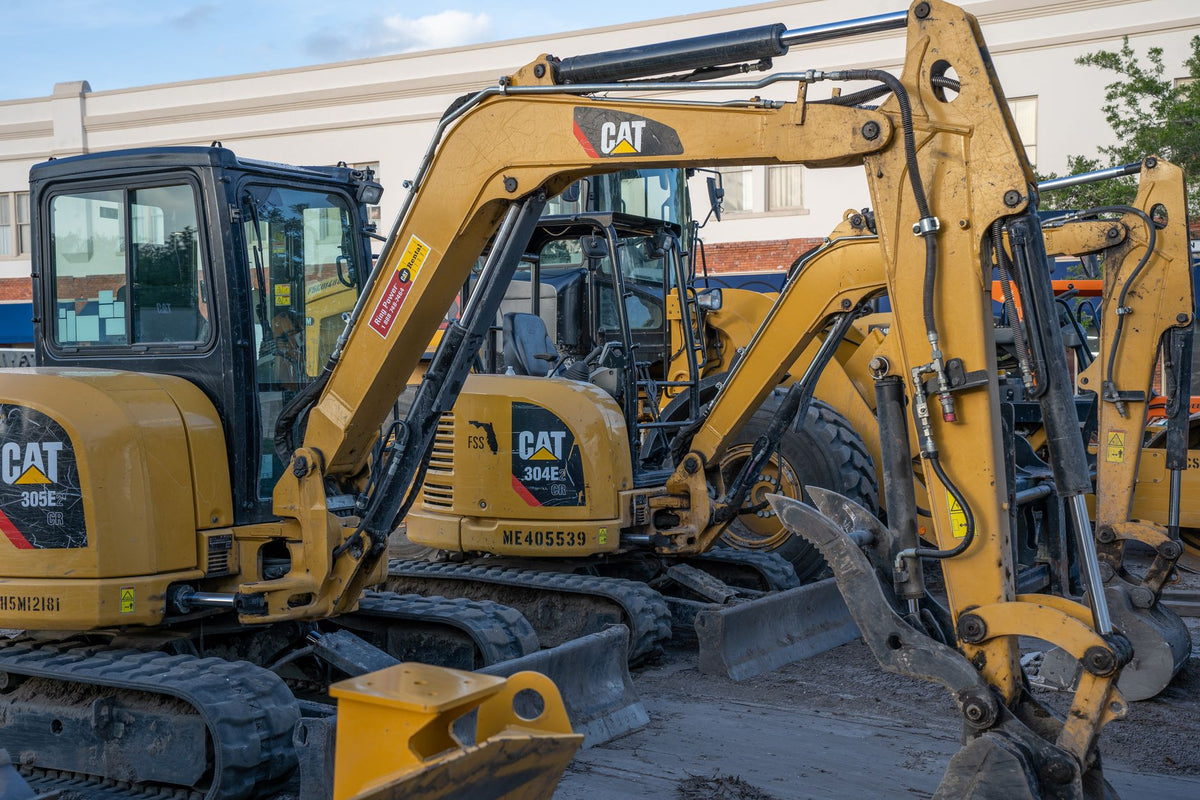
Outdoor equipment takes a beating — UV exposure, rain, mud, temperature swings, and abrasion that destroy standard paper labels within weeks. This guide covers what separates a heavy duty asset tag that lasts years outdoors from one that fails at the first frost, and which specific options from McAuley Labels match each outdoor use case in 2026.
TL;DR: For heavy duty asset tags on outdoor equipment in 2026, metallized silver polyester is the correct base material — it resists UV, moisture, and abrasion where paper and semi-gloss labels fail. McAuley Labels offers both barcode and ID-format versions with aggressive adhesive. If your equipment sees extreme conditions (pressure washing, direct sun, saltwater), go with the 3M-backed heavy duty silver options. Standard semi-gloss white is an indoor tag that will not survive outside.
Why material choice determines tag life outdoors
A tag printed on standard paper stock degrades in 30 to 90 days when exposed to weather. The print fades, the adhesive lifts, and the barcode stops scanning. In outdoor environments — construction sites, rental fleets, landscaping equipment, municipal vehicles, agricultural machinery — a failed tag means a lost asset record. In 2026, the replacement cost of re-tagging an entire fleet after preventable label failure is the most common reason operations teams ask about heavy duty specs in the first place.
The fix is matching the label face material and adhesive to the actual conditions the equipment faces, not buying whatever "looks professional."
Who this is for
This guide is for fleet managers, facilities teams, rental equipment operators, and anyone running outdoor asset tracking in 2026 who has watched cheap labels fail after one season. If you manage 50 or more pieces of equipment that live outside — trailers, generators, mowers, compressors, utility vehicles — you need tags rated for the conditions, not tags that work indoors and happen to be applied outside.
What to look for in heavy duty asset tags for outdoor equipment
Face material: metallized polyester over paper, always
Polyester film does not absorb moisture, so the face stays intact when the tag gets rained on or pressure-washed. Metallized silver polyester specifically adds UV reflectance, which slows print fading in direct sun. Paper and semi-gloss stock are cellulose-based — they swell, crack, and delaminate outdoors. For any equipment that spends more than 30 days outside, polyester is the only defensible choice in 2026.
Adhesive grade: permanent aggressive vs. standard
Standard adhesive holds on clean, dry, indoor surfaces. Outdoor equipment surfaces are often powder-coated, textured, oily, or galvanized — all of which reduce bond strength. Aggressive permanent adhesive, or 3M-grade adhesive, creates a mechanical bond that holds on those surfaces without surface prep beyond a quick wipe. Tags that peel at the corners in humid conditions almost always have standard adhesive on a surface that needs aggressive.
Print format: barcode vs. ID label
Barcode tags (linear or QR) integrate with asset management software and scanners, which matters if your team does cycle counts in the field. ID labels (sequential numbers, human-readable text) work for operations that log assets manually or use a simpler spreadsheet-based system. Both formats are available in the same durable materials — the choice is about your workflow, not the outdoor performance.
Label size and sequential numbering
Outdoor equipment is often scanned from a distance or at an angle, so label size matters more than indoors. A 1.5" x 0.5" tag readable at 6 inches is wrong for a generator that sits 3 feet off the ground. Sequential pre-numbering saves setup time on large fleets — you apply tags in order rather than printing and managing a database before tagging.
Legibility after abrasion
Equipment that gets loaded, unloaded, stacked, or transported regularly will abrade any tag surface. Thermal transfer printing — where ink is physically pressed into the label face rather than sprayed on — survives surface contact far better than inkjet or direct thermal output. Tags printed with a thermal transfer printer using resin or wax-resin ribbon hold up to scraping and rubbing that would strip direct thermal print in days.
Tamper evidence
For rental fleets and government-owned assets, tamper-evident tags that void or fragment on removal discourage theft and unauthorized transfers. This is less critical for internal fleet tracking but essential for any equipment that leaves your premises with a third party.
Top picks for outdoor equipment in 2026
The standard outdoor workhorse — metallized silver barcode tag
The asset tags heavy duty silver barcode is the correct default for most outdoor equipment tracking programs in 2026. Metallized silver polyester face, aggressive adhesive, sequential barcode pre-printed. It scans cleanly after months of outdoor exposure where paper-based tags have already failed. One spec that matters: the polyester face will not delaminate in freeze-thaw cycles the way paper stock does.
Verdict: Buy for any fleet or equipment operation running outdoor asset tracking.
The ID-format version for manual tracking
If your team logs assets by number rather than scanning barcodes, the asset tags heavy duty silver ID label provides the same metallized polyester durability with a human-readable sequential number format. Same outdoor performance, different data format. This is the right call for smaller operations tracking under 200 assets where scanning infrastructure isn't in place.
Verdict: Buy when your workflow is manual, Consider if you're scaling toward barcode scanning within 12 months — start with barcodes now to avoid re-tagging.
Maximum hold on rough surfaces — 3M-backed custom asset tags
For equipment with textured, painted, or galvanized surfaces — trailers, heavy machinery, outdoor electrical enclosures — the custom ID inventory labels 3M heavy duty uses 3M adhesive that bonds where standard adhesives lift. The trade-off is these are custom-ordered rather than pre-stocked, so lead time applies. Worth the wait for 100+ unit deployments on demanding surfaces.
Verdict: Buy for rough or contaminated surfaces. Consider if your equipment has clean powder-coat and the standard heavy duty silver already holds.
QR code format for smartphone scanning
The custom QR code asset tags stickers heavy duty metalized adds QR scanning capability on the same durable metallized polyester base. Useful for teams that use smartphone apps rather than dedicated barcode scanners, or for equipment records that link to maintenance logs via URL. The QR module must be printed at sufficient density to scan reliably after outdoor exposure — heavy duty metalized stock maintains print contrast where cheaper materials fade.
Verdict: Buy if your team scans with phones. Skip if you're running a dedicated barcode scanner program — linear barcodes scan faster at range.
What to avoid for outdoor use
- Semi-gloss white paper tags: The asset tags semi-gloss white barcode and ID versions are well-suited for indoor environments — offices, server rooms, climate-controlled warehouses — but paper-based stock absorbs moisture. Outdoor exposure causes edge lift within weeks and print degradation within one season. Do not apply these outside regardless of how aggressive the adhesive is.
- Standard adhesive on unprimed metal: Any tag with standard adhesive applied directly to bare, oily, or galvanized metal will peel. The adhesive requires surface prep or an upgrade to 3M-grade adhesive. Skipping prep and using standard adhesive is the single most common cause of outdoor tag failure in 2026.
- Direct thermal output for outdoor print: Direct thermal printing uses heat-sensitive coating on the label face. That coating degrades in sunlight and heat — exactly the conditions outdoor equipment faces. Tags printed on a direct thermal printer will fade faster outdoors than the same label stock printed via thermal transfer. Use thermal transfer printing for any outdoor-rated label.
Comparison table
| Tag | Material | Adhesive | Format | Best for |
|---|---|---|---|---|
| Heavy duty silver barcode | Metallized polyester | Aggressive permanent | Barcode | Most outdoor fleets |
| Heavy duty silver ID label | Metallized polyester | Aggressive permanent | Sequential ID | Manual tracking ops |
| 3M heavy duty custom ID | Metallized polyester | 3M | Custom ID | Rough/textured surfaces |
| QR code heavy duty metalized | Metallized polyester | Aggressive permanent | QR code | Smartphone scanning |
| Semi-gloss white barcode | Paper/semi-gloss | Standard | Barcode | Indoor only |
FAQ
What makes an asset tag "heavy duty" for outdoor equipment? A heavy duty outdoor asset tag uses a polyester or metallized polyester face material instead of paper, combined with an aggressive permanent adhesive. Polyester resists moisture, UV, and abrasion; aggressive adhesive holds on powder-coated and textured surfaces that standard adhesive releases from.
How long do heavy duty asset tags last outdoors? Metallized polyester tags with thermal transfer printing typically last 3 to 5 years outdoors under normal conditions. Exposure to salt spray, continuous submersion, or heavy abrasion can reduce that. Paper-based tags in the same conditions fail in 30 to 90 days.
Are metallized silver asset tags scannable after outdoor exposure? Yes, when printed via thermal transfer at 203 DPI or higher. The metallized face maintains print contrast, and the barcode or QR module stays readable after UV exposure and surface contact that would render direct thermal or inkjet printing unscannable.
What adhesive do I need for galvanized or textured metal surfaces? 3M-grade adhesive is the correct choice for galvanized steel, textured paint, and rough metal surfaces. Standard permanent adhesive does not create enough initial bond strength on those surface types and will peel at the edges within weeks outdoors.
Can I print heavy duty asset tags in-house? Yes. McAuley Labels sells both pre-printed custom asset tags and blank heavy duty label stock compatible with thermal transfer printers. In-house printing makes sense when you need variable data (unique sequential numbers, custom fields) on large quantities. Pre-printed tags are faster for standardized deployments.
What's the difference between a barcode asset tag and a QR code asset tag for outdoor equipment? Linear barcodes scan faster at range with a dedicated scanner and work with most asset management software. QR codes encode more data and scan with any smartphone camera, which matters for field teams without dedicated scanners. Both are available in outdoor-rated metallized polyester from McAuley Labels in 2026.
Is semi-gloss white ever appropriate for outdoor equipment? Only if the equipment stays under a covered structure and is never exposed to rain, humidity, or direct sun. In practice, that's unusual for outdoor equipment. Use metallized silver polyester any time there is meaningful outdoor exposure.
Do I need tamper-evident tags for rental equipment? For any equipment that leaves your facility with a renter or third party, tamper-evident labels that void on removal reduce unauthorized transfers and theft. Standard heavy duty tags do not provide tamper evidence — specify void or destructible-face material if that's a requirement.
One last thing
The most expensive mistake in outdoor asset tagging is not the wrong tag — it's re-tagging. Every piece of equipment that gets a failed label has to be located, cleaned, and re-tagged, often in the field. At scale, that labor cost exceeds the price difference between a cheap paper tag and a heavy duty metallized polyester tag by a factor of 10 or more. Buy the right tag once in 2026.