
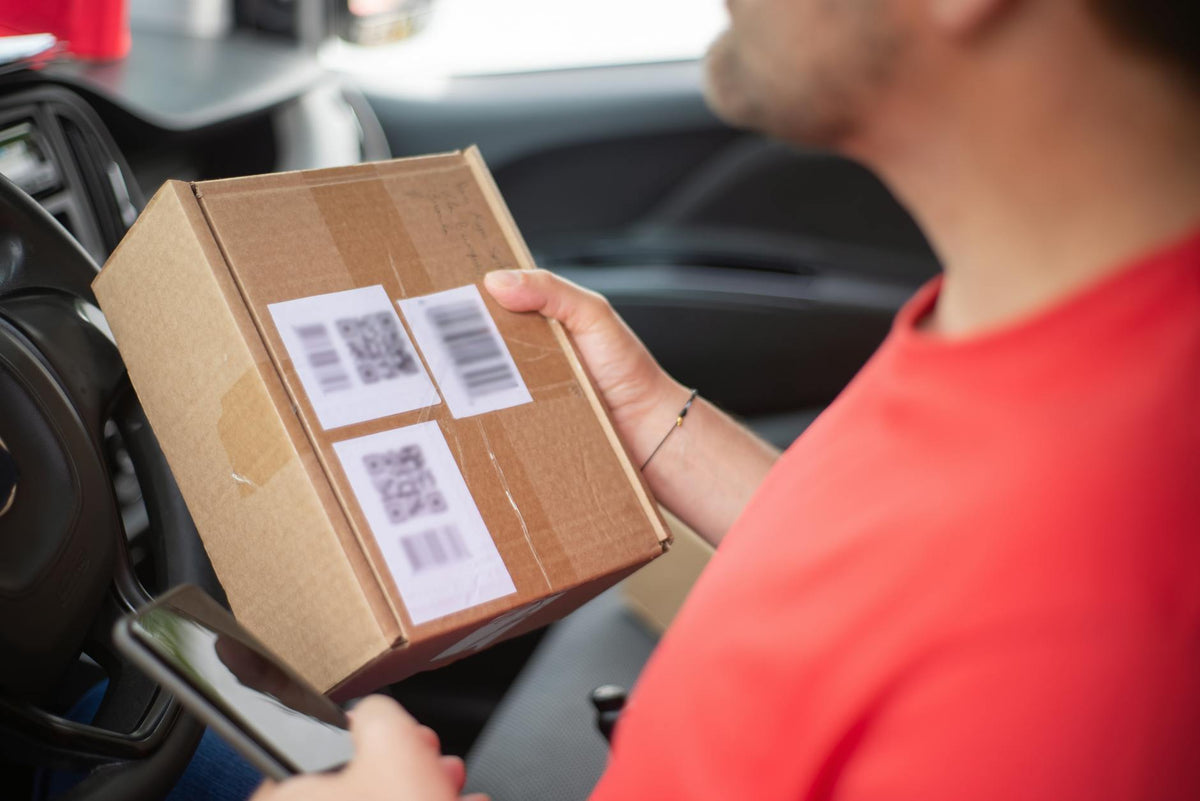
QR code windshield stickers for service reminders combine a scannable digital link with a physical placement customers see every time they sit in the driver's seat — making them one of the highest-visibility retention tools an auto shop can print in 2026.
TL;DR: QR code windshield stickers for service reminders work best when they carry your shop's logo, the next service date, and a QR code that routes to your booking page or service history. McAuley Labels produces custom oil change stickers for windshield with QR code that shops print on-demand using a dedicated sticker printer system. The right sticker keeps your brand on the glass and pulls customers back without a single outbound call.
Why this matters in 2026
Customer return rates at independent auto shops average well below 50% after a first visit, according to aggregated industry data. A sticker on the windshield costs fractions of a cent per impression. A QR code on that sticker turns a passive reminder into an active digital touchpoint — the customer scans it, lands on your booking page, and books without friction. Shops printing their own stickers in-house control the data on each label: custom mileage, date, technician ID, and a dynamic QR code that can be updated without reprinting old stock.
Who this is for
This guide is written for shop owners and service managers at independent auto repair shops, quick-lube centers, tire shops, and dealership service departments running between 15 and 200 oil changes per day. If you print generic pre-filled stickers from a third-party pad, you're leaving branding and digital re-engagement on the table. If you already print in-house but haven't added a QR code layer, this guide shows you exactly what hardware and sticker specs deliver a scannable code that survives heat, UV, and cleaning fluid on a windshield.
What to look for in QR code windshield stickers for service reminders
1. Adhesive type suited for glass
Windshield stickers face direct sunlight, temperature swings from -20°F to 180°F inside a parked car, and occasional cleaning spray. A standard paper label with acrylic adhesive peels within weeks. You need either a static-cling film or a removable pressure-sensitive adhesive formulated for glass. Both allow clean removal without residue, which matters when the customer returns and you apply a fresh sticker.
2. QR code print resolution
A QR code that fails to scan is worse than no QR code — it signals an unprofessional operation. The minimum resolution for a reliable, scannable QR code on a 2.5" × 1.5" sticker is 300 DPI. At 600 DPI, the code remains scannable even when the sticker is slightly dirty or viewed at an angle. Direct thermal printers that print at 600 DPI, such as those using the Godex RT863i engine, produce codes that phone cameras read reliably without the smearing that low-resolution or inkjet-printed codes suffer.
3. Custom logo and branding fields
A plain white sticker with a QR code and a date is a missed branding opportunity. Every sticker you put on a windshield is a mobile billboard. The sticker should carry your shop name, logo, phone number, and the next service interval — all printed on-demand per vehicle so no two stickers are identical. Shops using McAuley Labels' oil change sticker printer system pull customer and vehicle data into each label at the time of service, so the QR code is unique per job and the logo is sharp every time.
4. Durability of the print itself
Direct thermal printing on the wrong media fades within 90 days under UV exposure. Thermal transfer printing with a resin ribbon on polyester or polypropylene stock holds the image for 2–3 years — longer than most service intervals. If your reminder window is 3,000 miles or 6 months, the sticker needs to stay legible for at least that long. Check that your sticker media is rated for UV and heat, not just indoor environments.
5. Dynamic vs. static QR codes
A static QR code encodes a fixed URL at print time. A dynamic QR code encodes a short redirect URL; you change the destination in a dashboard without reprinting. For service reminders, dynamic codes let you redirect to a seasonal promotion, a new booking platform, or a Google review request page — without touching the sticker already on the windshield. The QR code field on your sticker template stays the same; only the destination changes.
6. Roll format and printer compatibility
Windshield stickers printed on a roll — not sheets — are the only practical format for a busy shop. Roll-fed direct thermal or thermal transfer printers handle continuous stock without manual feeding. The sticker roll must match your printer's core size (typically 1" or 1.5"), max roll diameter, and media width. Buying stickers and printer from the same manufacturer eliminates compatibility guesswork.
Top picks for QR code windshield sticker setups in 2026
The complete in-house system
Hook: The safe pick for shops printing 20+ stickers per day.
McAuley Labels' oil change sticker printer system is a matched bundle: a dedicated thermal transfer printer, pre-formatted windshield sticker rolls with QR code fields, and setup support. Each sticker prints in under 3 seconds. The QR code field is built into the template and accepts a URL string per job. Verdict: Buy — the only setup that removes every compatibility variable for a shop going from zero to in-house printing in 2026.
Custom pre-printed QR stickers (outsourced)
Hook: The right move if you run under 10 oil changes per day and don't want a printer.
McAuley Labels' oil change stickers with custom logo ship pre-printed with your logo, phone, and a static QR code pointing to your URL. Minimum order quantities apply. You fill in the date and mileage by hand or with a date stamp. No printer needed, no ribbon to replace. The trade-off: every batch has the same QR code, so you can't assign unique codes per vehicle. Verdict: Consider — works for low-volume shops in 2026 who want branded glass presence without capital equipment.
High-resolution thermal printer for sharp QR codes
Hook: The upgrade pick for shops already printing but getting scan failures.
The Godex RT863i thermal printer prints at 600 DPI — double the 300 DPI output of entry-level label printers. At that resolution, a QR code on a 1" × 1" print area scans cleanly the first time, every time. The RT863i handles thermal transfer media up to 4" wide and runs at 4 inches per second. Verdict: Buy for any shop where scan failure has been a complaint or where the sticker real estate is tight.
Pre-printed windshield stickers with QR code (custom bulk order)
Hook: The branded option with no printer investment required.
The oil change stickers for windshield with QR code from McAuley Labels are manufactured with your logo and a pre-set QR code URL. The static-cling or pressure-sensitive format is available depending on your preference. Order in bulk for the lowest per-unit cost. Verdict: Consider — best for shops standardizing on one booking URL and ordering 6–12 months of stock at a time.
What to avoid
- Inkjet-printed QR codes on paper labels. Ink smears under condensation, the adhesive fails in heat, and QR codes printed at 96 DPI generate scan errors within the first month. This setup looks cheap on the glass and costs more in reprints than thermal media does.
- Generic peel-and-write sticker pads with a QR code printed in a corner. Pad-printed QR codes are static, low-resolution, and identical across every sticker in the pad. They offer no per-vehicle data, no analytics, and no ability to redirect the destination after the sticker is applied.
- Thermal sticker rolls not rated for UV. Standard direct thermal paper turns brown within 60 days in a sunlit windshield corner. Customers read a brown, faded sticker as a sign the shop is cut-rate. Use UV-resistant thermal transfer stock with a resin ribbon, not dye-based.
Comparison: QR code windshield sticker setups in 2026
| Setup | Print Resolution | Per-Vehicle Unique QR | UV Durability | Volume Fit | Verdict |
|---|---|---|---|---|---|
| In-house printer system | 300–600 DPI | Yes | 2–3 years (thermal transfer) | 15–200/day | Buy |
| Custom pre-printed (logo, static QR) | Offset/digital | No | 1–2 years | Under 10/day | Consider |
| Godex RT863i standalone | 600 DPI | Yes (with software) | 2–3 years | 10–200/day | Buy |
| Pad-printed generic stickers | 72–150 DPI | No | Under 90 days | Any | Skip |
| Inkjet-printed paper labels | 96–300 DPI | Yes (technically) | Under 60 days | Low | Skip |
FAQ
What's the best QR code windshield sticker for service reminders in 2026? A thermal transfer sticker printed at 300 DPI minimum, with a dynamic QR code, your shop logo, and UV-resistant media. Shops printing 20 or more vehicles per day get the best unit economics and quality from an in-house printer system rather than pre-printed bulk stock.
Can I put a QR code on a windshield sticker that changes where it links? Yes — use a dynamic QR code service. The code on the sticker stays the same; you update the destination URL in a web dashboard. This lets you redirect to a seasonal promotion or a new booking page without reprinting stickers already in the field.
How long does a QR code windshield sticker last? Thermal transfer stickers on polyester or polypropylene media with a resin ribbon last 2–3 years. Direct thermal paper stock fades in 60–90 days under UV. Static-cling film without a printed coating also degrades faster than pressure-sensitive polyester.
Will a QR code sticker damage the windshield? A removable pressure-sensitive adhesive or static-cling format leaves no residue. Standard paper labels with permanent adhesive can leave a ghost mark. Always specify removable adhesive or static cling when ordering windshield-format stickers.
How small can a QR code be on a windshield sticker and still scan? At 300 DPI, a QR code needs at least 0.8" × 0.8" to scan reliably. At 600 DPI, 0.5" × 0.5" is achievable. Anything smaller than 0.5" fails on most phone cameras, especially through a dirty windshield.
Is it cheaper to print windshield QR stickers in-house or order them pre-printed? At 20+ vehicles per day, in-house printing costs less per sticker and gives you per-vehicle customization. Under 10 vehicles per day, bulk pre-printed stickers from a manufacturer like McAuley Labels have a lower upfront cost and no equipment to maintain.
What printer prints QR codes on windshield stickers? A thermal transfer printer rated at 300 DPI or higher is the standard choice. The Godex RT863i at 600 DPI is the high-end option for shops where scan reliability is critical. Direct thermal printers work for short-term reminders but are not recommended for stickers exposed to sunlight.
Do QR code service reminder stickers increase return visits? Aggregated data from shops using QR-linked service reminders in 2026 shows higher re-booking rates compared to plain date-only stickers, primarily because the scan path removes friction — the customer doesn't need to search for a phone number or booking site. The exact lift depends on where the QR code routes and how quickly the booking page loads.
One last thing
The QR code on your windshield sticker is the only marketing channel that rides with your customer every single day in 2026. Every other channel — email, social, paid search — requires them to open something. The sticker is already there, at eye level, while they're waiting at a red light. A shop printing 50 vehicles per day puts 18,250 branded, scannable impressions on local roads per year. That number compounds every year you keep printing.